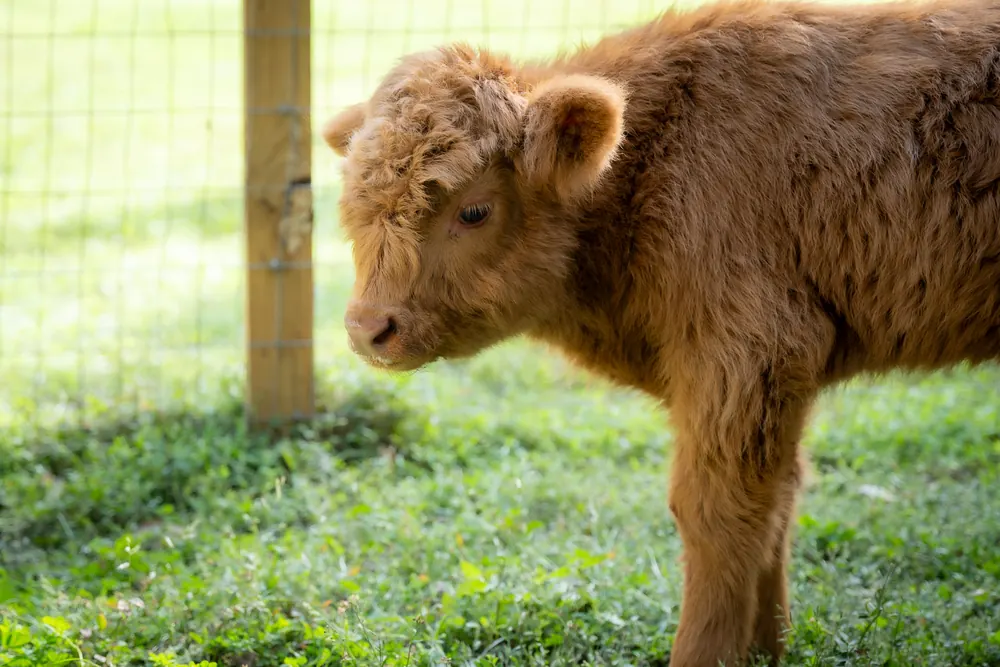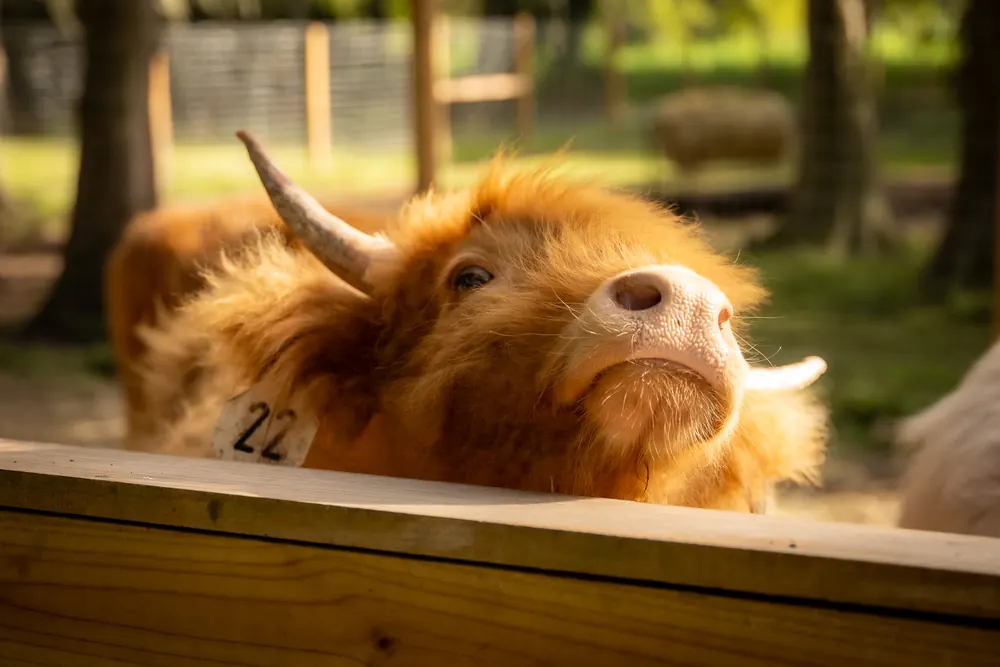
The long hair is the first thing anyone notices about a Highland cow. It is also the reason the breed exists as it does: these cattle developed outdoors in the wet, windy Highlands and islands of Scotland, and that coat is their built-in weather gear.
Highland cows have long hair because they evolved outdoors in harsh Scottish weather. A long, oily outer coat sheds rain and snow, and a soft undercoat holds in warmth. Their bangs, called a dossan, help protect their eyes from flies and weather.
A Coat With Two Layers
Highlands grow a double coat:
- The outer coat is long and coarse and can reach about 13 inches. It is naturally oily, which helps rain and snow run off.
- The undercoat is soft and downy, and it traps warmth close to the body.
Because the coat does so much of the insulating, Highlands do not need as thick a layer of fat as many other cattle to stay warm. It also gives them some protection from rough brush.
Why Do Highland Cows Have Bangs?
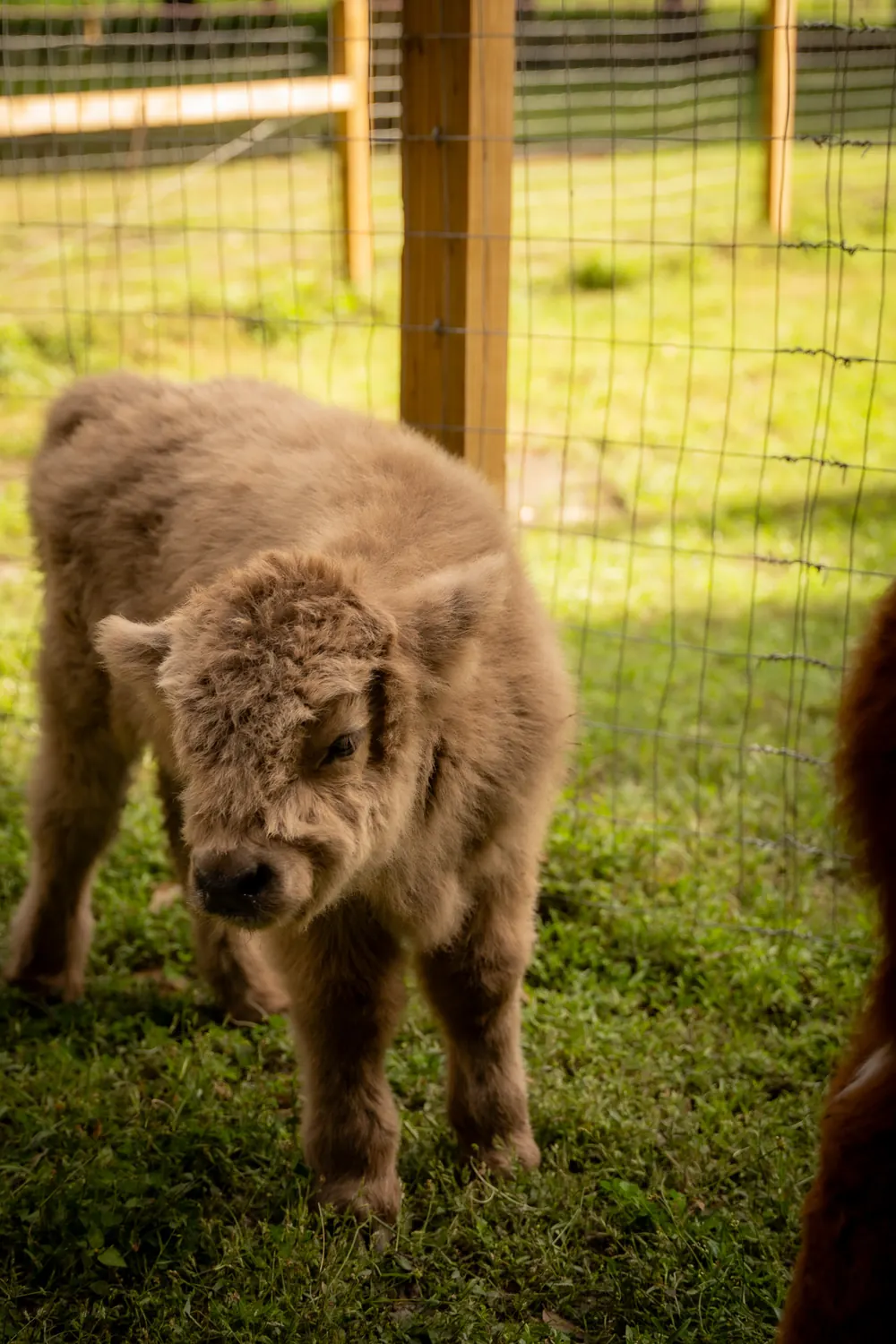
That fringe has its own name: the dossan. It hangs between the horns and over the face. It helps shield their eyes from sun, rain, wind and flies, and breed sources credit it with fewer eye problems such as pink eye than some other cattle.
Can They See Through It?
Yes. It looks as though they should be walking into things, but Highlands see fine through their bangs. When you meet one, it knows exactly where you are, so move slowly and stay where it can see you. Our guide to whether Highland cows are friendly has more tips.
Do They Get Too Hot In Florida?
It is a fair question, especially here in Kissimmee. Highlands shed much of their heavy coat as the days get longer and grow it back in the fall, and shade and water matter a lot. Read more in Can Highland Cows Live in Florida?
Are Calves Born Fluffy?
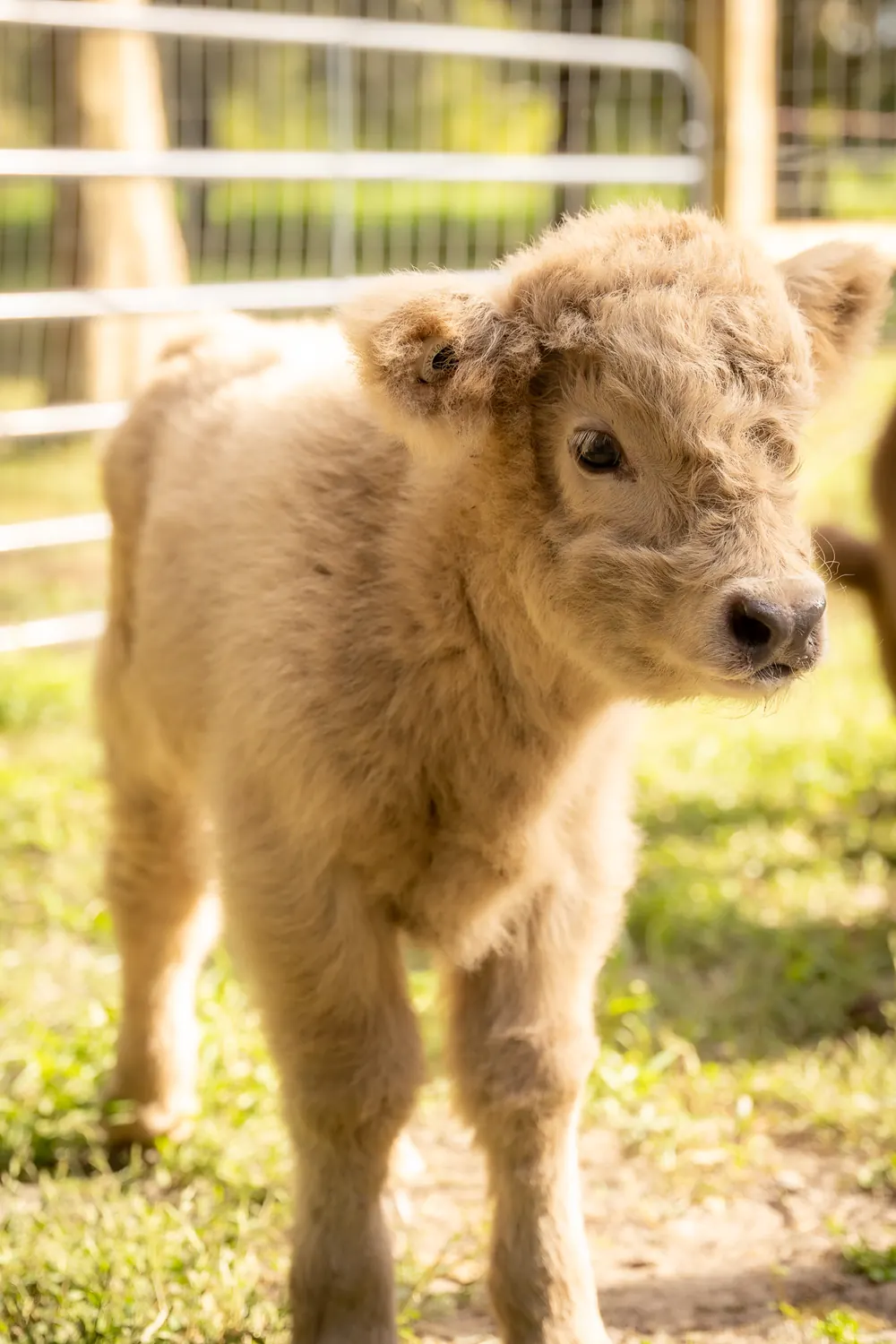
Yes, and that is a big part of the appeal. Our mini Highland calves were born this fall and are soft from nose to tail. You can feel the difference between the calves and an older Highland's coarser coat for yourself at Mini Moo Land. See more baby Highland cow facts.