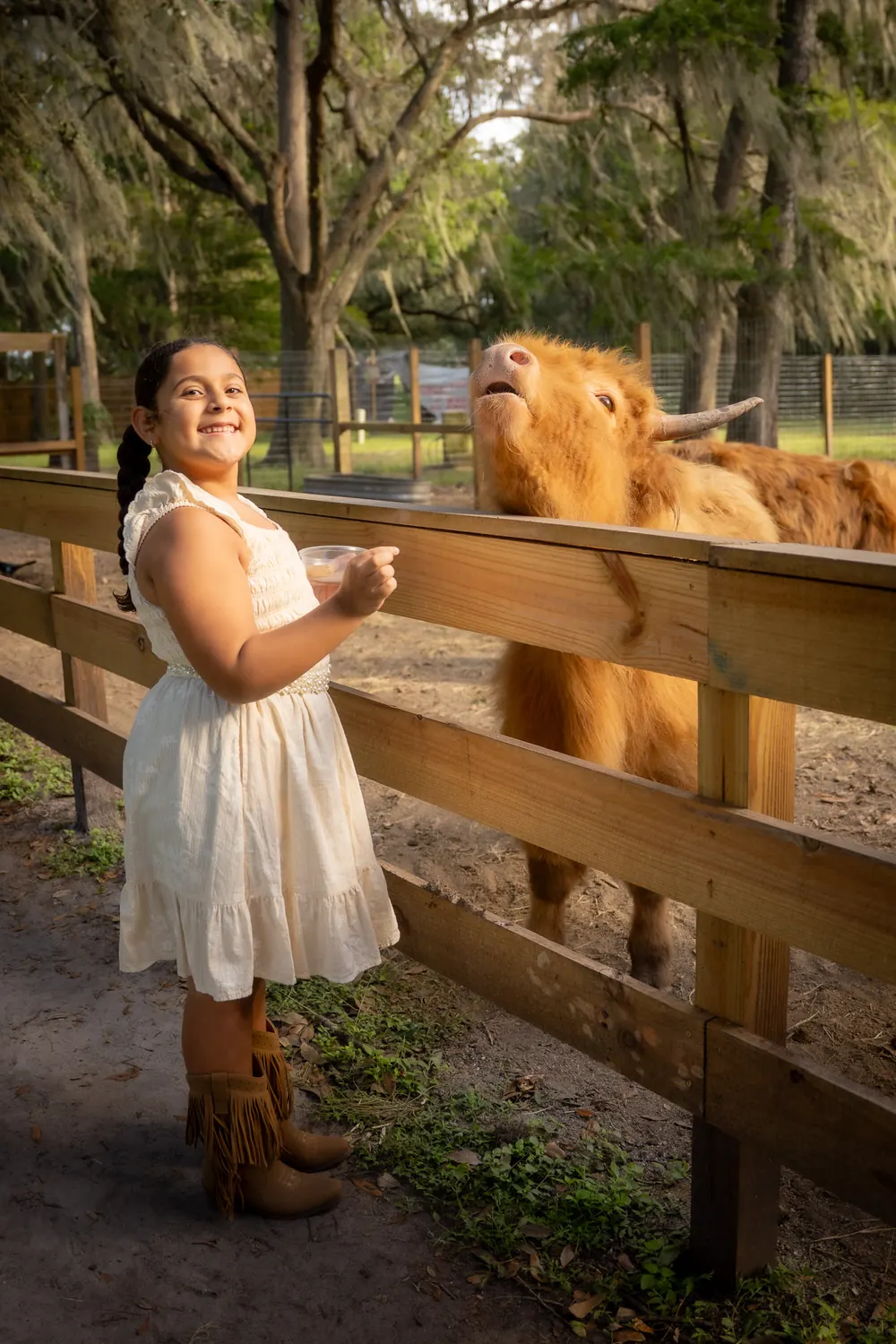
Those long, sweeping horns are as much a part of the Highland look as the shaggy coat. If you have ever wondered whether only the bulls have them, the answer may surprise you.
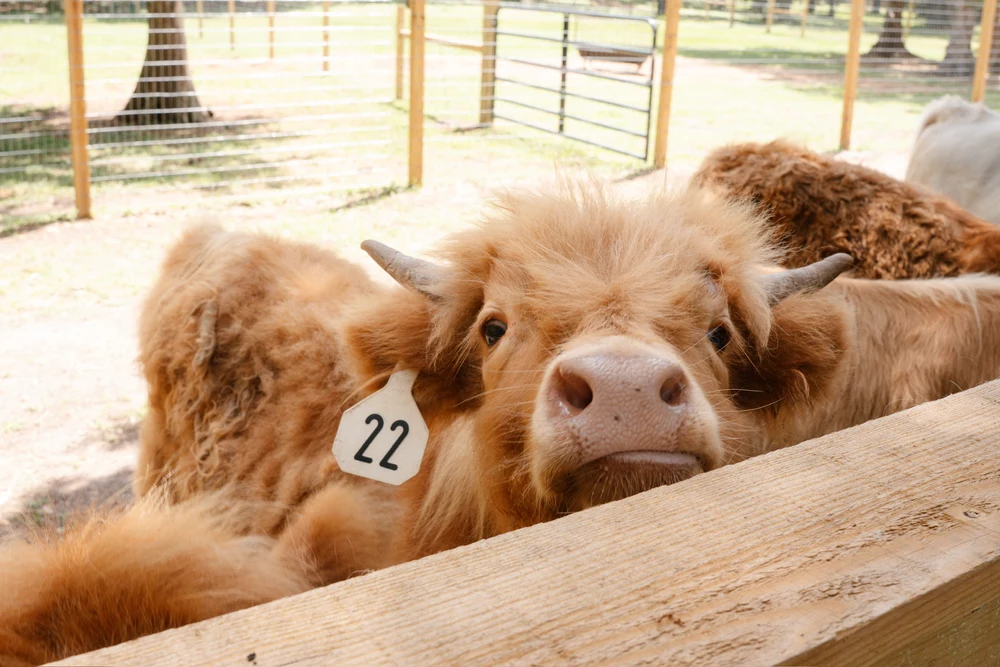
Yes. Both male and female Highland cattle grow horns. Bulls' horns are usually heavier and curve more forward, while cows' horns tend to be finer and sweep up and out. Calves are not born with visible horns; they develop as the calf grows.
Cow Horns Vs Bull Horns
| Cows (females) | Bulls (males) | |
|---|---|---|
| Do they have horns? | Yes | Yes |
| Shape | Finer, often sweeping up and outward | Heavier, wider at the base, curving more forward |
Individual animals vary, so this is a guide and not a rule.
What Are The Horns For?
Historically, horns helped Highlands protect themselves and push through rough undergrowth in the Scottish hills. Today they are still a defining feature of the breed.
When Do Calves Get Horns?
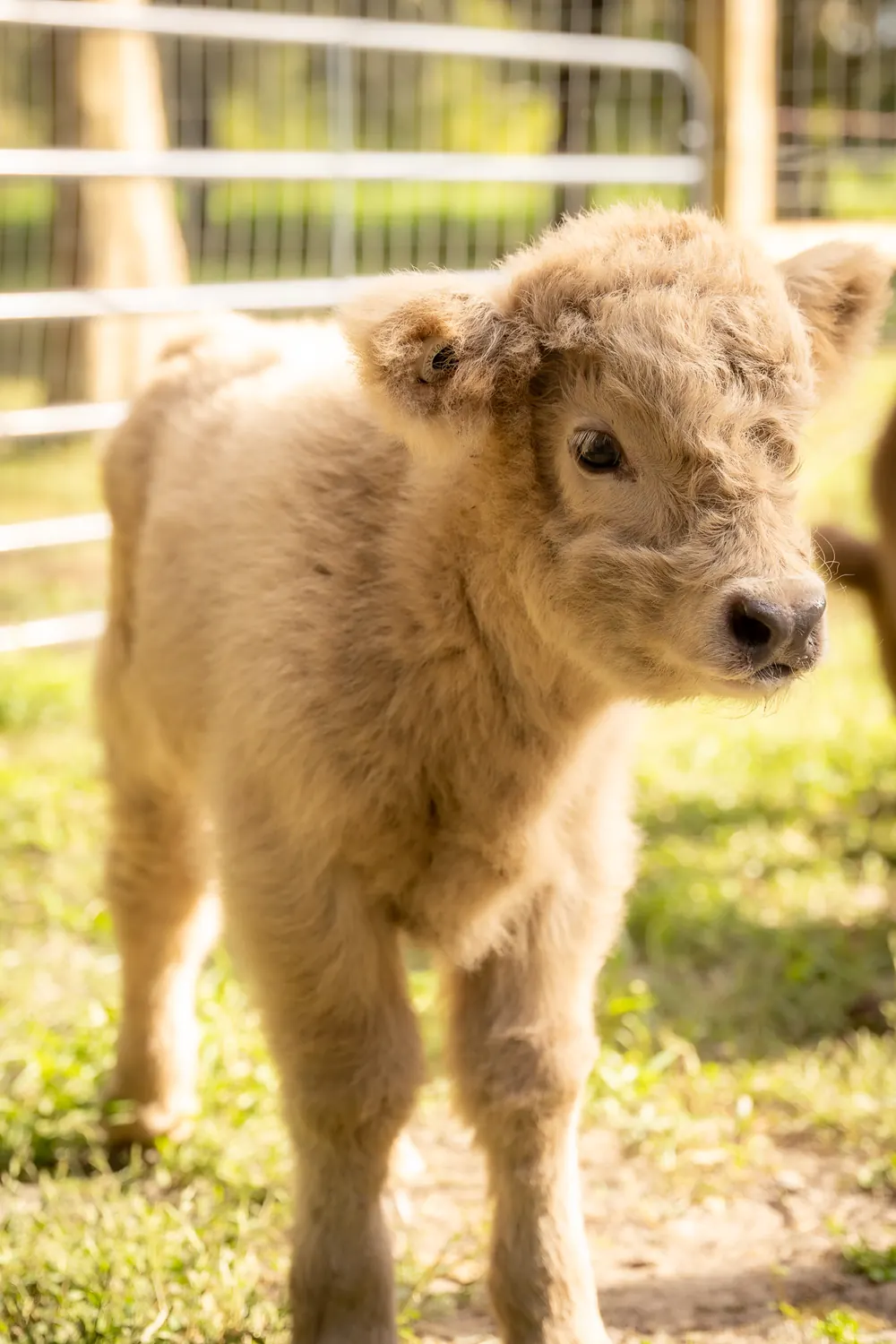
Highland calves are not born with visible horns. They develop as the calf grows, so our calves, who were born this fall, have soft fluffy heads for now. Meet them at the baby Highland cow bottle feeding, and see more in Baby Highland Cow Facts.
Do Mini Highlands Have Horns?
Minis are Highlands in a smaller size, so they can grow horns too. Some owners choose to have cattle dehorned, usually for safety, which is why you may see a Highland without them. Learn more about how big mini Highland cows get.
Are The Horns Dangerous?
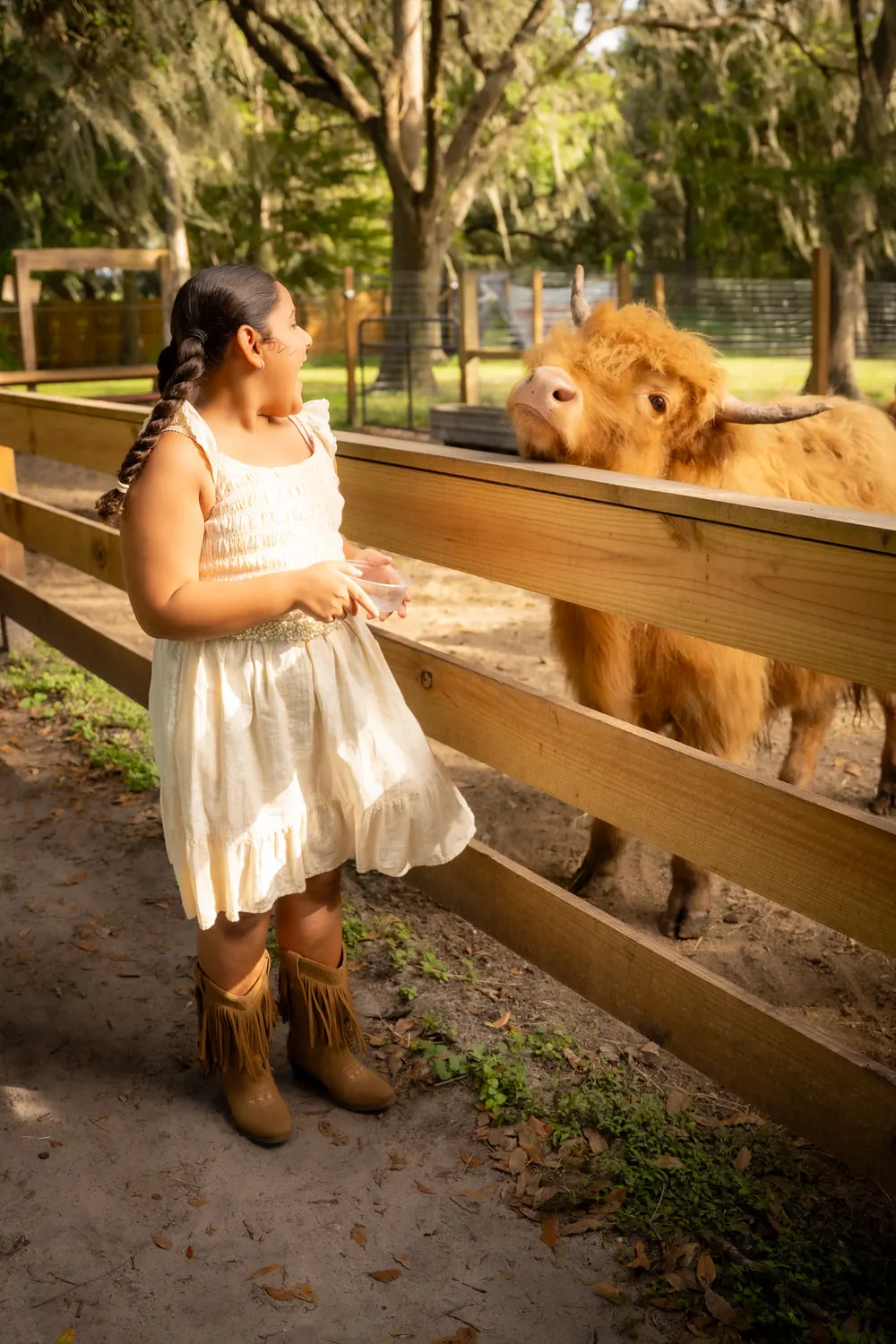
Highlands are known for being calm, but a horn is still a horn, and a cow swinging its head to chase a fly can catch you by accident. Keep your face clear, approach from where the cow can see you, and follow the staff's directions. Our guide to whether Highland cows are friendly covers how to meet one safely.
Why Do Some Highland Cows Have Nose Rings?
Nose rings are not a Highland trait. Farmers use them on cattle of many breeds, most often bulls, to make a large animal easier to lead and handle. If you see one on a Highland in a photo, that is the likely reason.