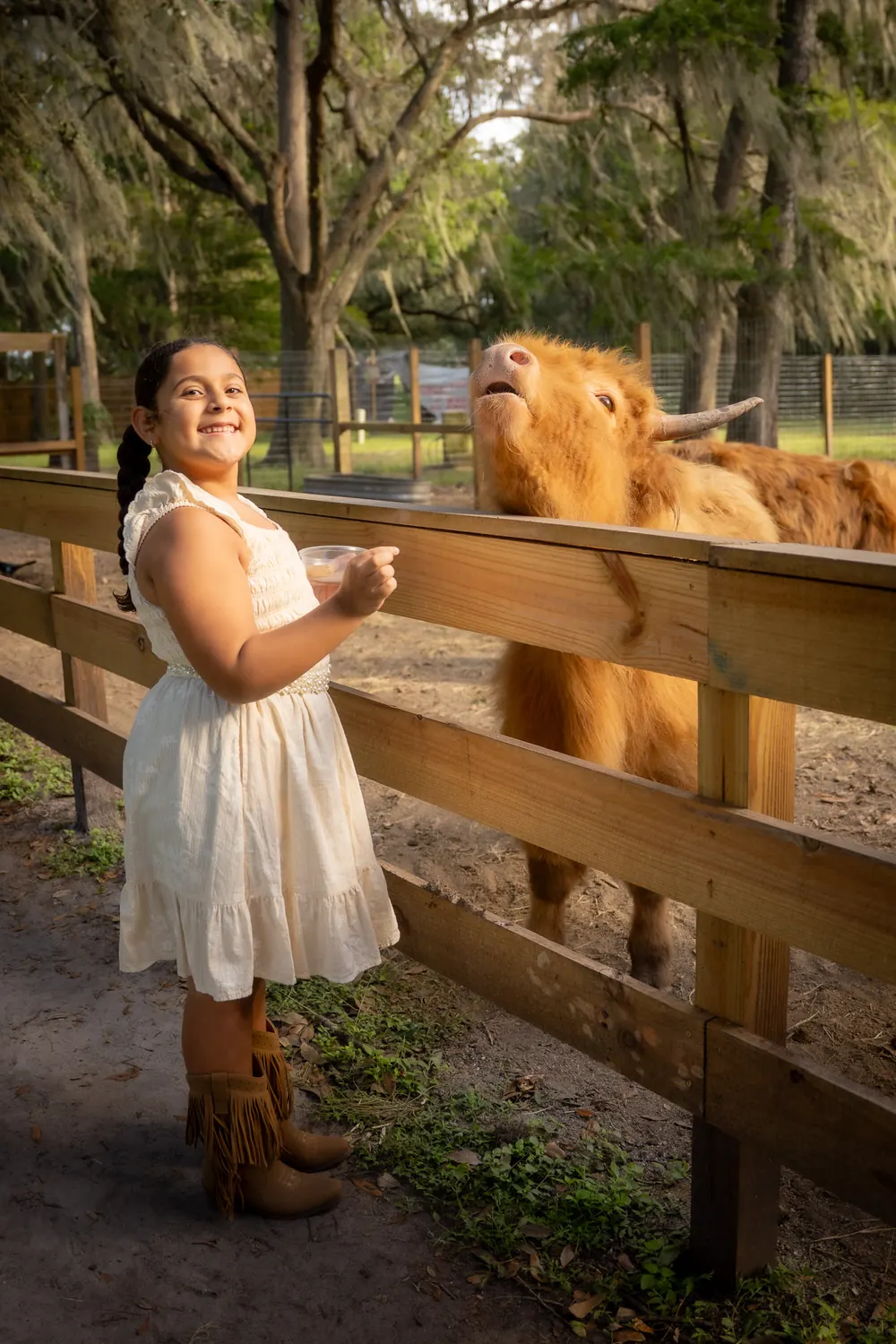
It is one of the first things guests ask when they meet our herd in Kissimmee: how does a cow with that much hair survive a Florida summer? It is a fair question. Highland cattle come from the cold, wet, windy Highlands and islands of Scotland, and they are famous for being one of the most cold-hardy cattle breeds in the world.
Yes, Highland cows can live in Florida, but they need help. Highlands are far less heat tolerant than the Brahman-type cattle Florida ranchers traditionally raise, so they depend on shedding their winter coat, plenty of shade, constant fresh water and good airflow. With that care, they do well here, and the cooler months from about October through April are when they look their fluffiest.
Why Highland Cows Are Built For Cold
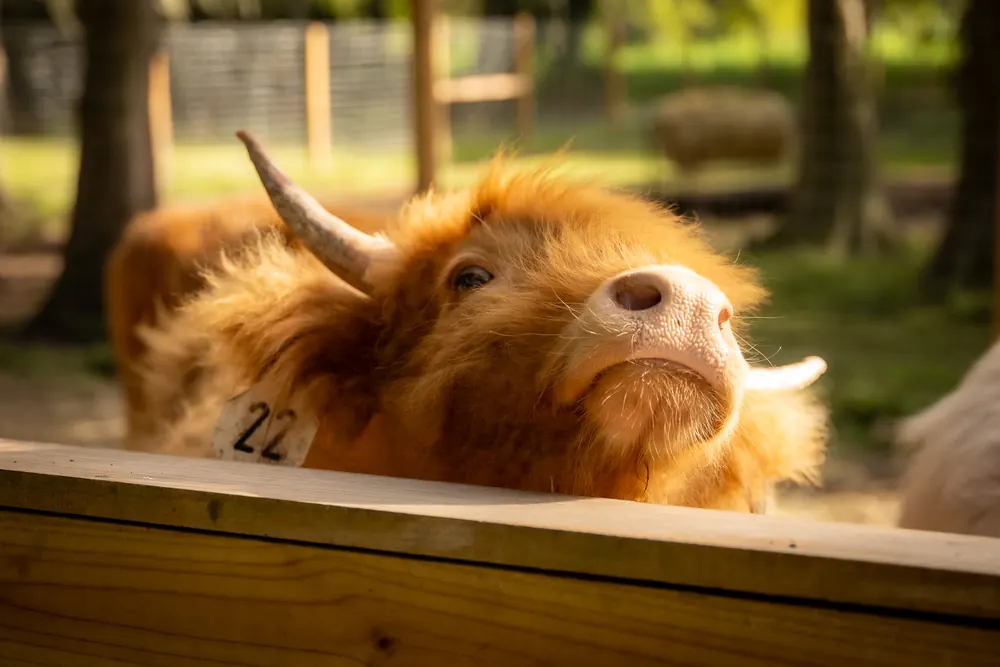
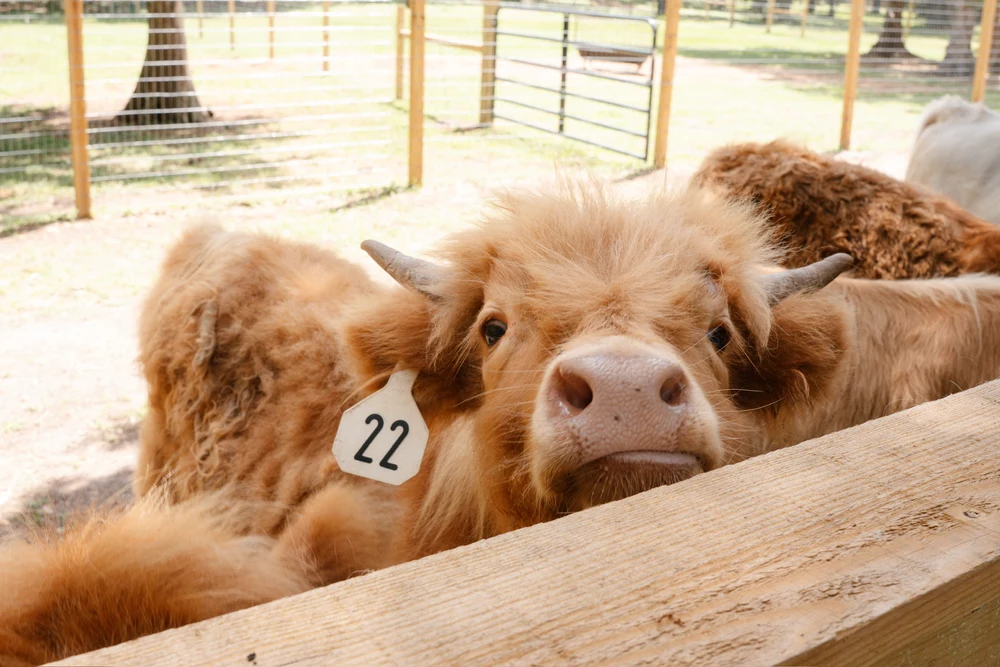
Highlands carry a double coat. The outer layer is long, coarse and slightly oily, and it is often described as the longest hair of any cattle breed. It sheds rain and snow. Underneath is a soft, downy undercoat that traps warm air against the skin. That combination is so effective that Highland cattle are often compared to caribou and reindeer for cold tolerance, and in Scotland they live outdoors year round on rough hill grazing.
That same insulation is the problem in a place like Kissimmee, where summer days sit in the 90s with high humidity. Cattle cool themselves mainly by sweating, panting and losing heat through the skin. When humidity is high, sweat evaporates slowly, and a heavy coat makes it harder still to shed body heat.
Their Secret Weapon: The Seasonal Shed
Here is the part most people do not know. Like many cattle, Highlands respond to day length. As days get longer in spring, they shed much of that heavy winter coat and grow a lighter, sleeker summer coat. Animal science research going back decades has shown that cattle with sleek summer coats handle heat far better than cattle still carrying a deep winter coat, and extension specialists today use shedding scores to judge how well cattle will cope with hot, humid weather.
So a Highland in Florida in July does not look like the wind-blown postcard Highland in January. The summer version is noticeably less shaggy. The fluff comes back as the days shorten in fall, which is why late fall and winter are peak "photo" season for Highland cows in Florida.
What Highlands Need To Stay Comfortable In Florida
1. Real shade, all day
Shade is the single most important thing. Big trees or covered barns let cattle get out of direct sun during the hottest hours. At Mini Moo Land, the herd spends the day under large live oaks with a covered barn area close by.
2. Fresh water, always
Cattle drink much more in hot weather. Clean, cool water that is always available is non-negotiable.
3. Airflow
A breeze, or fans in covered areas, helps cattle lose heat from their skin. Low, still, humid spots are the hardest places for any heavy-coated animal.
4. A schedule that works with the weather
Cattle naturally graze and move around more in the cooler parts of the day and rest in the shade when it is hot. Good keepers plan handling, feeding and activity around that.
5. Watching for heat stress
Signs of heat stress in cattle include heavy or open-mouth panting, drooling, standing with the head lowered, crowding into shade or water, and eating less. Anyone who keeps Highlands in the South should know these signs and have a veterinarian they can call.

Do Mini Highland Cows Handle Heat Better?
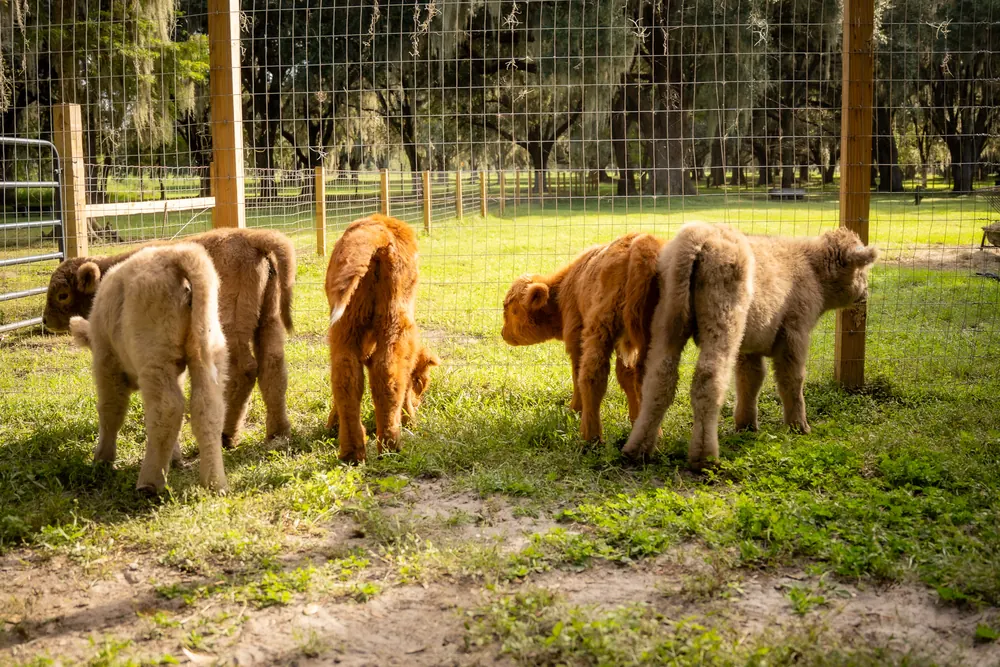
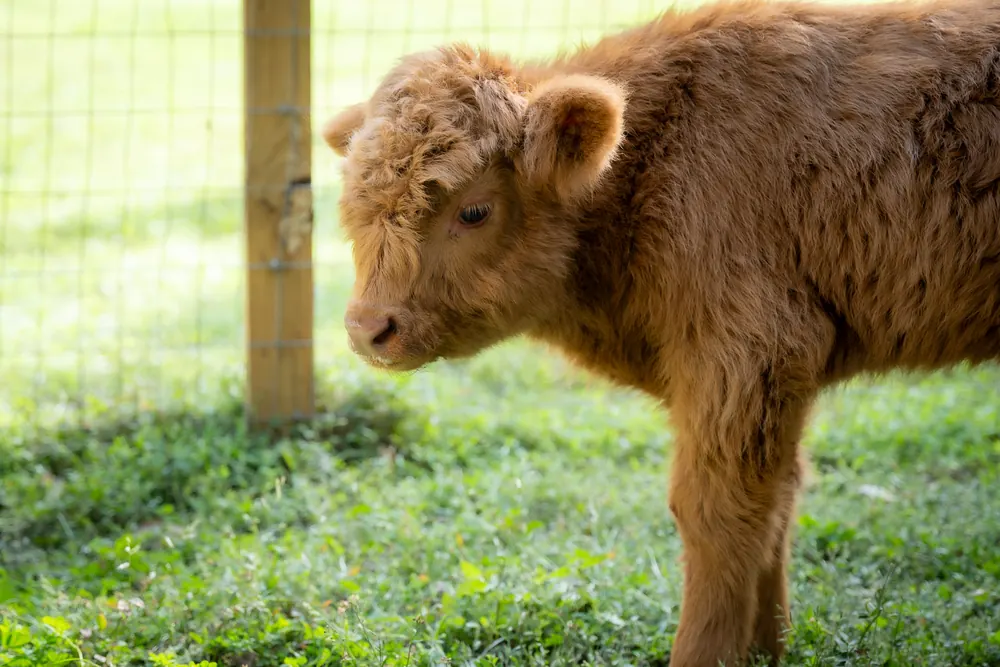
Not because of their size alone. A mini Highland has the same double coat and the same cold-weather genetics as a standard Highland, just in a shorter frame. Smaller animals do have a little more skin surface relative to their body weight, which helps them lose heat, but the coat, shade and water matter far more than size. If you are thinking about owning a mini in Florida, plan for the same heat precautions you would for a full-size Highland. Our guide to what a mini Highland cow really costs covers the rest.
When Is The Best Time To See Highland Cows In Florida?
Any day we are open is a good day to meet the herd, but a few tips will help you get the most out of a visit:
- October through April brings milder weather and fuller, fluffier coats. It is the best season for photos.
- Mornings are usually cooler and comfortable for both people and cows. Our first bottle feeding of the day is at 10:00 AM.
- Summer afternoons are still great for petting and hand-feeding, and the shade under the oaks keeps everyone more comfortable. Bring water and sunscreen for yourself.
Make It A Boggy Creek Day
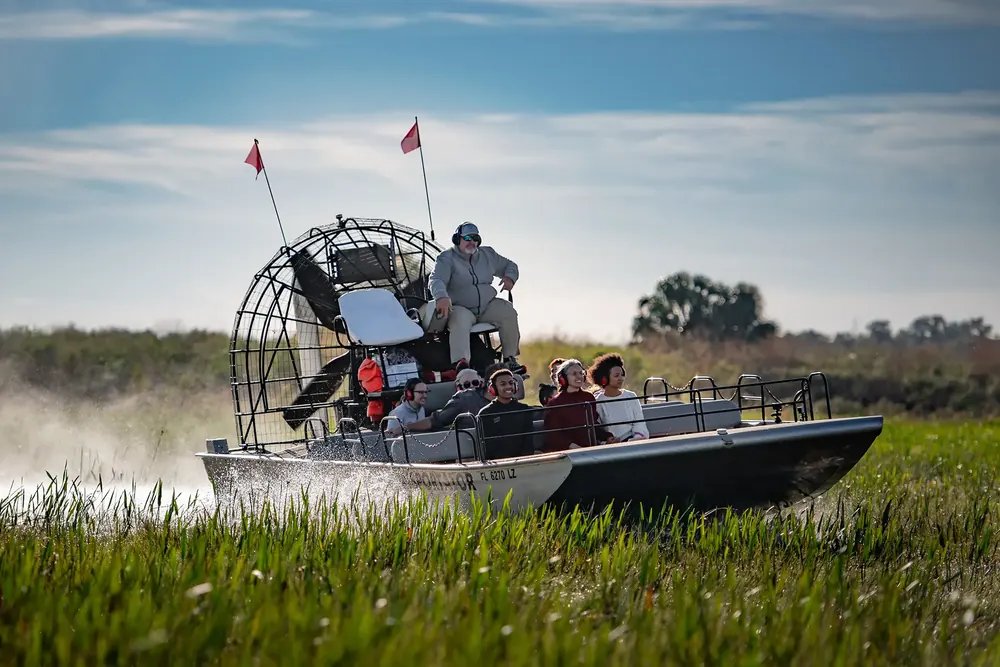
Mini Moo Land is one stop inside Boggy Creek Airboat Adventures, a Tripadvisor Travelers' Choice park with more than 9,000 reviews. After you meet the herd, the rest of the park is right there:
- Ride an airboat through the headwaters of the Everglades and look for wild alligators, turtles and wading birds. Choose a one-hour tour, a sunset tour or a night tour under the stars.
- Dig for gems at the 70-foot Prospector Gem Mine, where kids sift for semi-precious stones, fossils and crystals.
- Walk through Lily's Butterfly Garden and its native butterflies and plants.
- Visit the Gator Pond.
- Eat lakeside at Boggy Bottom BBQ.
The easiest way to do it all is the 1-hour airboat ride and Mini Moo Land combo, which costs $10 less than booking both separately.
Sources
- Wikipedia: Highland cattle (coat, cold tolerance, comparison with zebu cattle)
- CSIRO, Photoperiodicity in cattle: seasonal changes in coat character and heat regulation
- University of Missouri Extension, hair shedding scores and heat tolerance
- UF/IFAS, hair coat characteristics and thermotolerance in Florida beef cattle