Highland cows are the shaggy, long-horned cattle with a fringe of hair over their eyes, and they have taken over social feeds, plush aisles and home decor. The breed itself goes back centuries. Below you will find a quick reference table, 25 Highland cow facts, real photos of our herd and answers to the questions people ask most.
Highland cows are a hardy cattle breed from the Highlands and islands of Scotland. They are known for a long double coat, wide horns on both cows and bulls, and a calm temperament. Standard Highland cows weigh around 1,000 pounds and bulls around 1,400 pounds, mini Highlands stand under about 42 inches at the hip, and Highlands can live up to about 20 years.
Highland Cow Quick Facts
| Fact | Highland cows |
|---|---|
| Origin | The Highlands and Western Isles of Scotland |
| Herd book | First published in 1885, one of the oldest cattle registries |
| Weight (standard) | Cows about 1,000 lb, bulls about 1,400 lb |
| Mini Highlands | Under about 42 inches at the hip as adults |
| Lifespan | Up to about 20 years |
| Coat | Long double coat, partly shed in summer |
| Colors | Red (most common), yellow, black, dun, white or silver, brindle |
| Horns | Both cows and bulls grow them |
| Group name | A fold |
| Nickname | "Hielan coo" in Scotland |
Where Highland Cows Come From
1. They are from the Scottish Highlands and islands
Highland cattle developed in the rugged Highlands and the Western Isles of Scotland, where they lived outdoors on rough grazing through long, wet winters.
2. There used to be two types
Historically there was a smaller island type, often black, known as the Kyloe, and a larger mainland type that was often dun or red. Today they are bred as one breed.
3. Their herd book dates to 1885
The Highland Cattle Society was founded in 1884, and the first herd book, the official registry of pedigrees, was published in 1885. That makes Highlands one of the earliest cattle breeds with formal records.
4. The royal family keeps a herd
Queen Elizabeth II established a fold of Highland cattle at Balmoral Castle in 1954, and the royal estate still keeps Highlands today.
5. They reached the United States in the 1890s
The first recorded Highland imports to the US came in the late 1890s. The American Highland Cattle Association was organized in 1948.
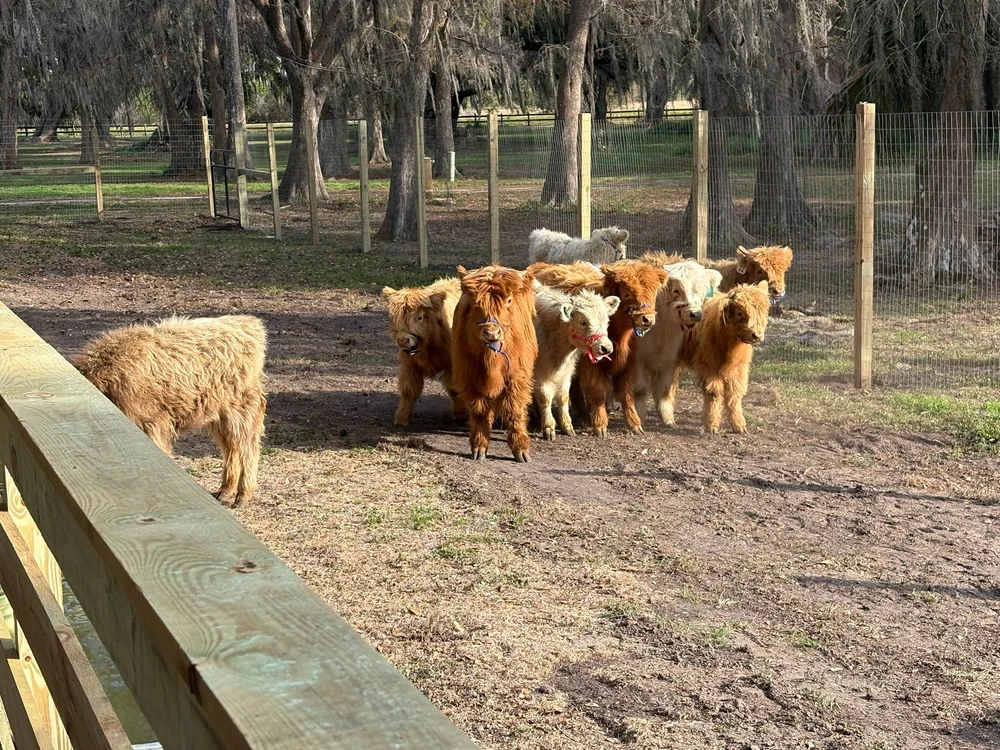
The Coat, The Bangs And The Horns
6. They have the longest hair of any cattle breed
Highlands grow a double coat: a long, coarse, slightly oily outer layer, often described as the longest of any cattle breed, over a soft, downy undercoat. Read more in why Highland cows have long hair.
7. That coat makes them incredibly cold hardy
Highlands are so well insulated that they are often compared with caribou and reindeer for cold tolerance. They rely mostly on that coat, rather than a thick layer of fat, to stay warm.
8. They shed for summer
Highlands shed much of their heavy coat as the days lengthen and regrow it in fall, which is a big part of how they cope in warm places like Florida. More on that in Can Highland Cows Live in Florida?
9. The bangs have a name
The fringe of hair over a Highland's eyes is called a dossan. It helps shield their eyes from rain, wind and insects, and they can still see through it.
10. Red is the most common color
About 60 percent of Highlands are reddish brown and roughly 22 percent are yellow. The rest are black, dun, white or silver, or brindle. See every shade in our guide to Highland cow colors.
11. Both cows and bulls have horns
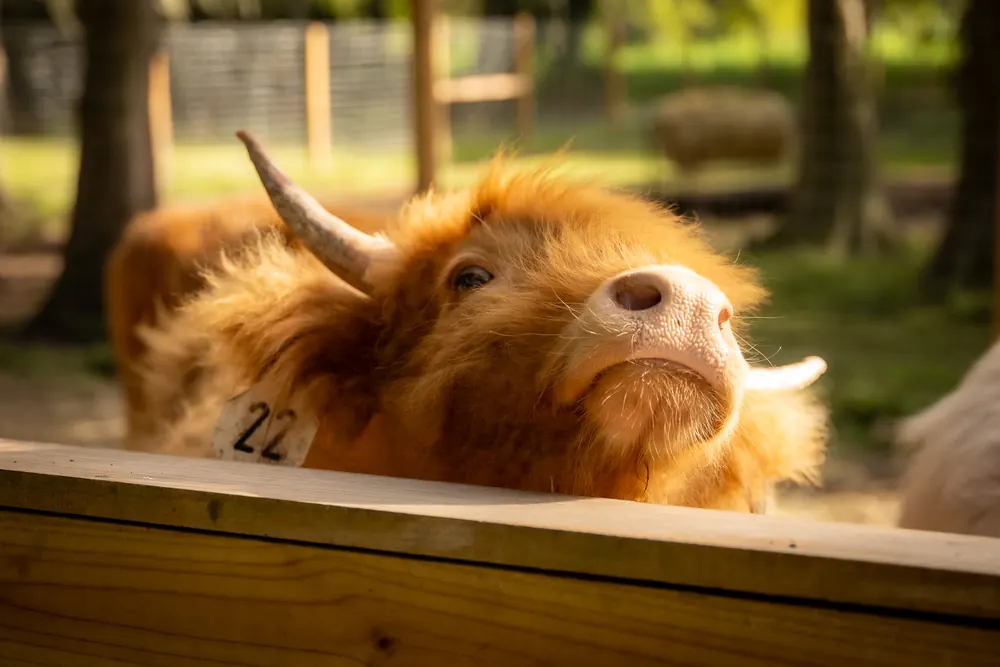
Male and female Highlands both grow long, wide horns. Bulls' horns tend to be heavier and curve more forward, while cows' horns often sweep upward. Calves are born without them. More in do Highland cows have horns?
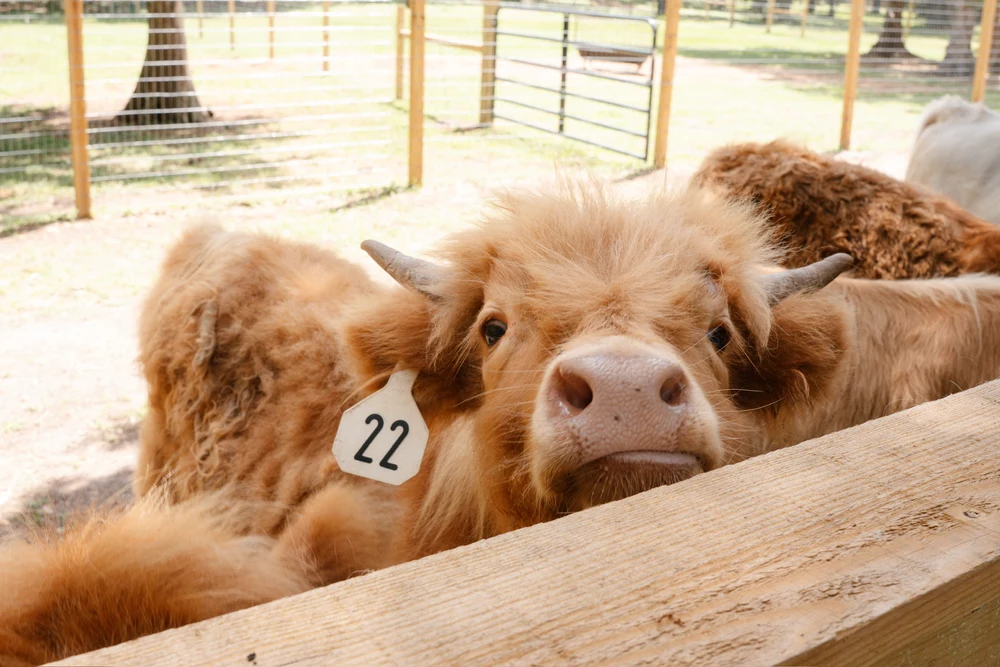
Size, Life And Personality
12. A standard Highland is big
Adult standard Highland bulls average around 1,400 pounds and cows around 1,000 pounds, though individuals vary.
13. Mini Highlands are much smaller
Mini Highlands are usually under about 42 inches at the hip as adults, and often weigh around half as much as a standard Highland. There is no single official height cutoff for "mini," so ask breeders for measured heights. Every cow in the Mini Moo Land herd is a mini. Learn more about mini Highland cows and how big mini Highlands get.
14. They live a long time
Highlands commonly live up to about 20 years, longer than most cattle breeds.
15. A group is called a fold
A herd of Highland cattle is traditionally called a fold, after the stone shelters once used to protect cattle through the winter.
16. They keep a strict pecking order
Highland herds settle into a clear social ranking based on age and size. A stable hierarchy means less fighting, which helps keep the herd calm.
17. They are known for being gentle
Despite the horns, Highlands are known for calm, docile temperaments, which is why they are so popular for farm visits. See Are Highland Cows Friendly? for tips on meeting one.
Highland Cow Photos From Our Herd
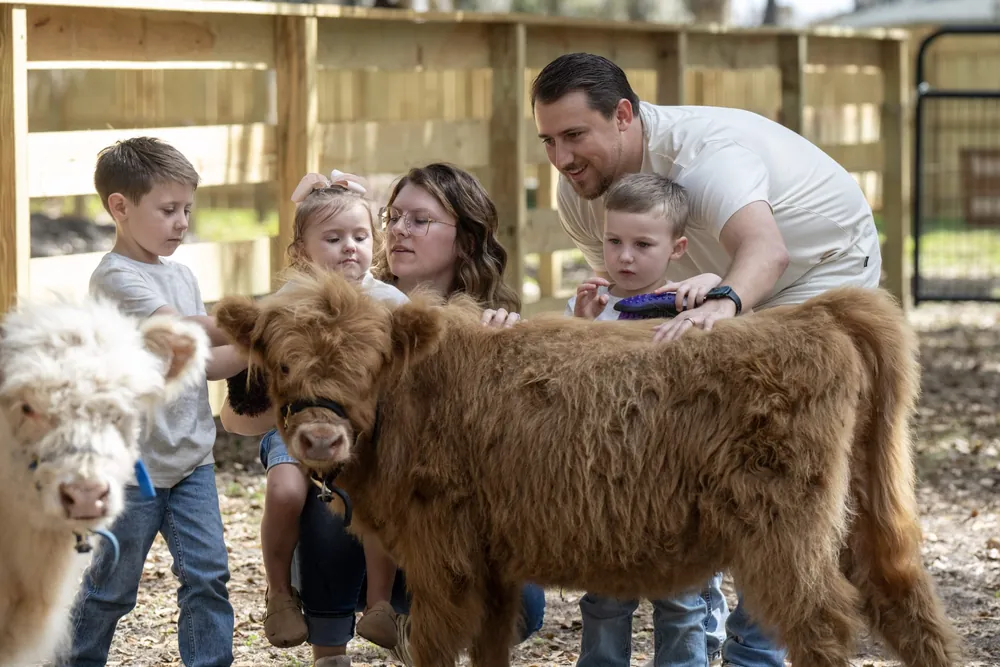
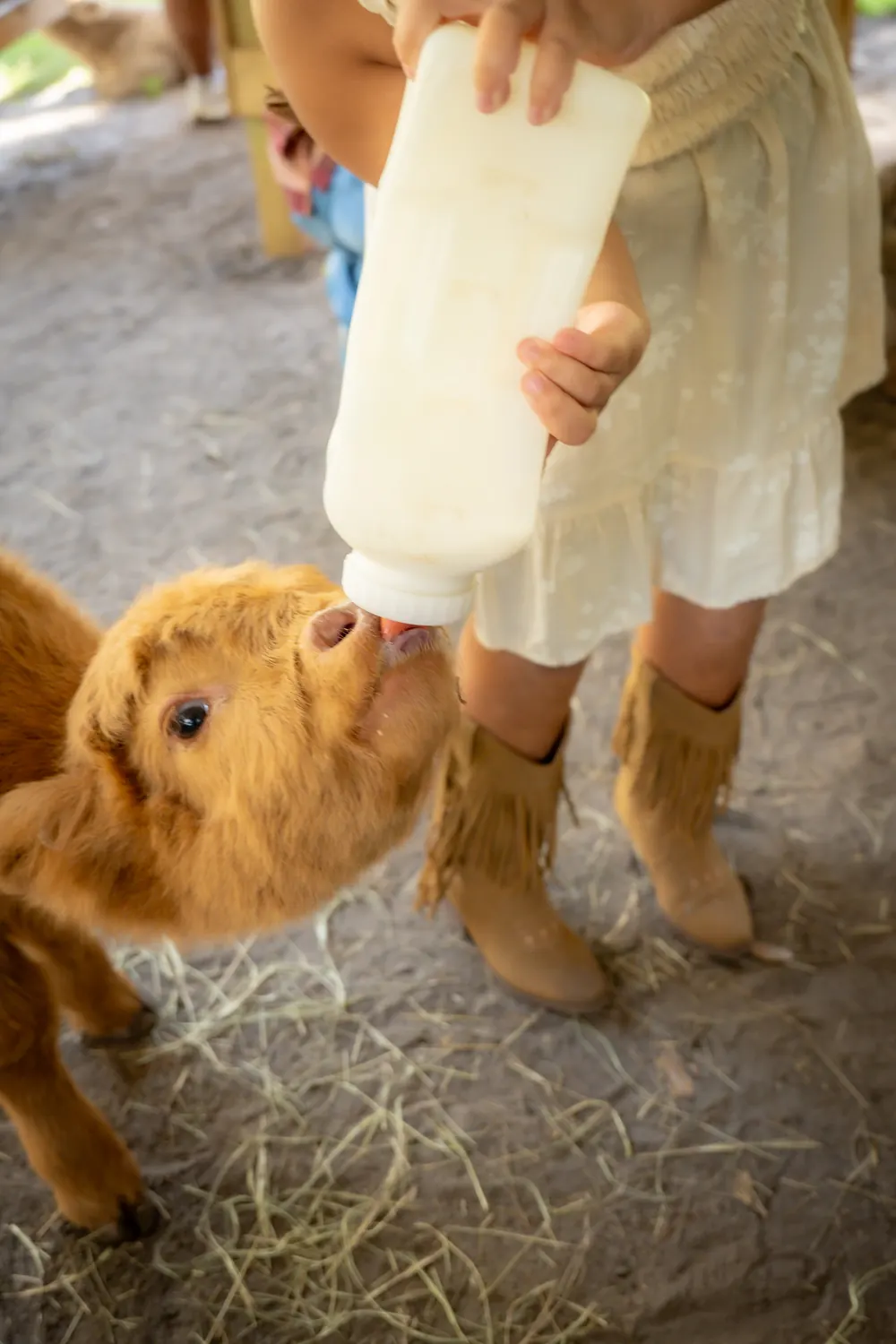
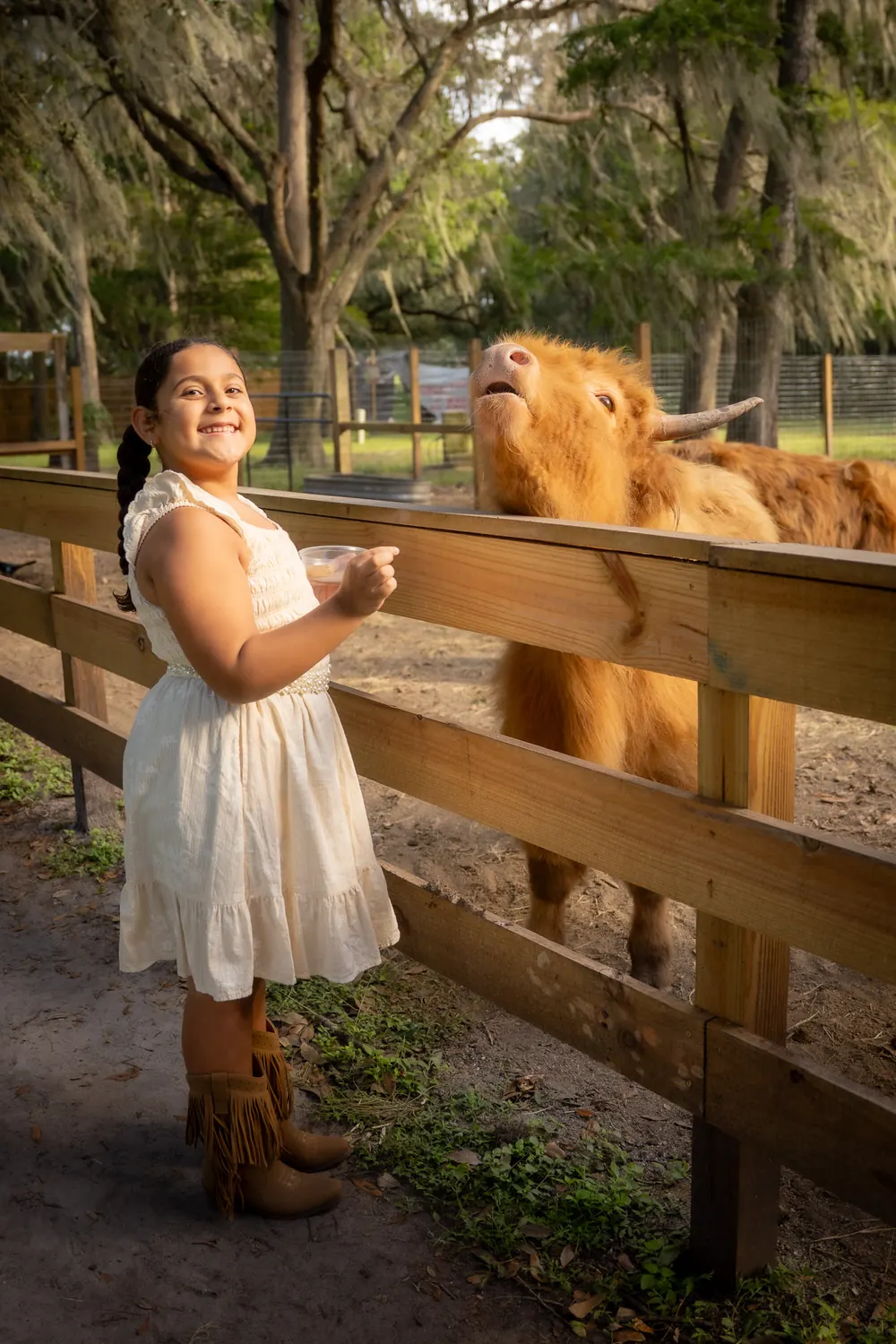
These are real photos of the mini Highland calves and cows at Mini Moo Land in Kissimmee, Florida. Our seven baby calves were all born this fall, so right now they are at their smallest and fluffiest.
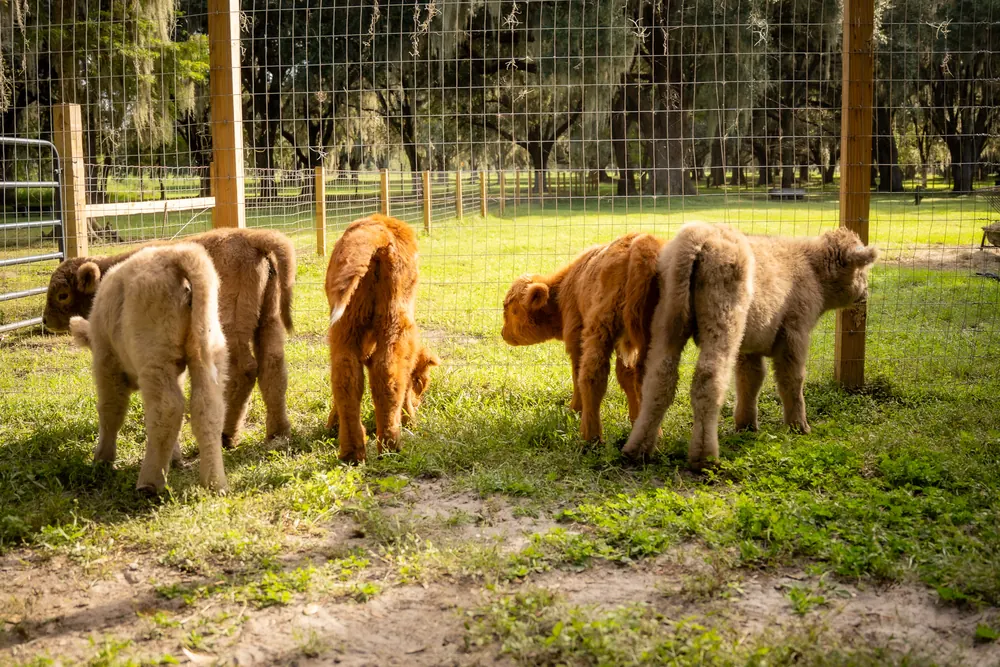
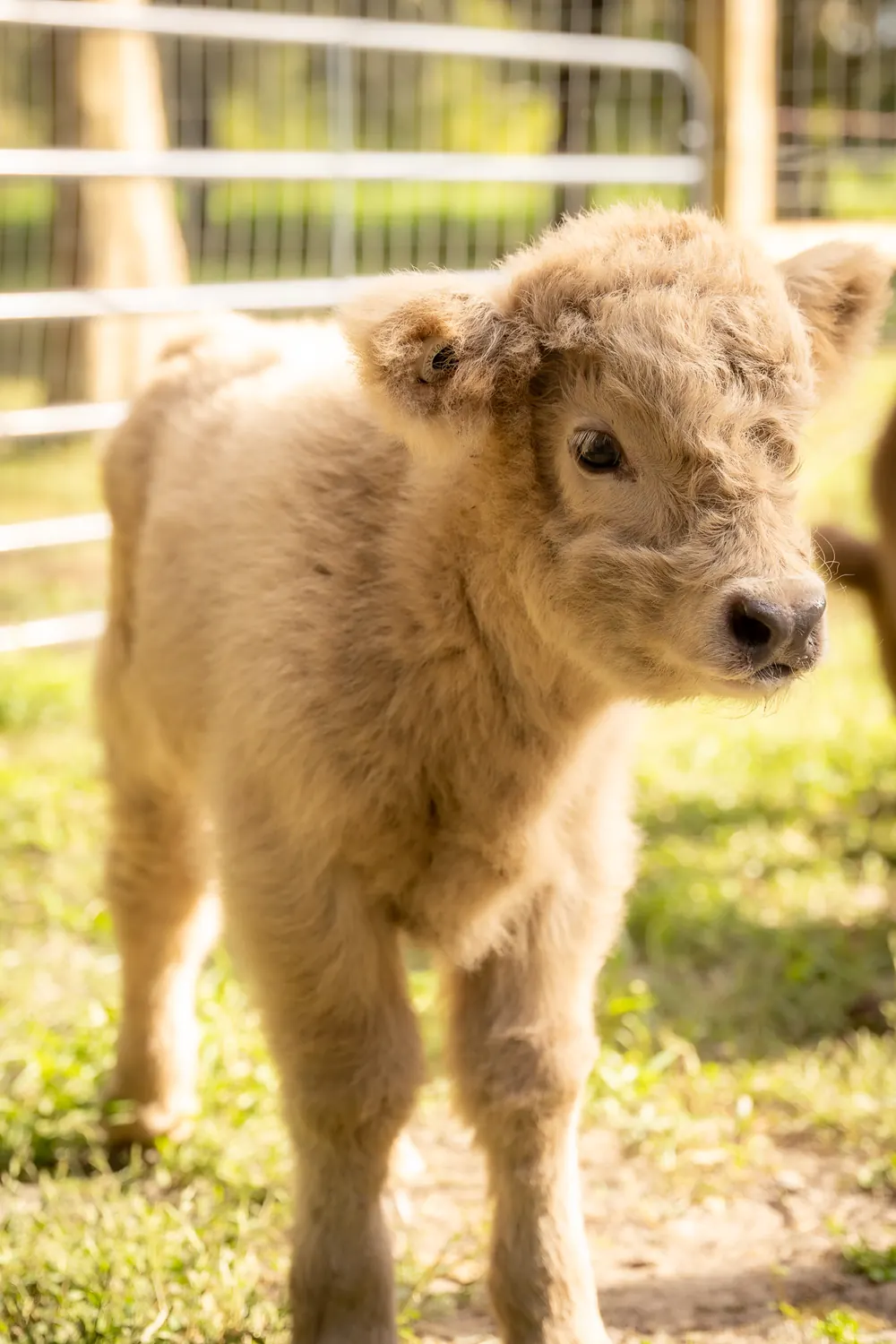
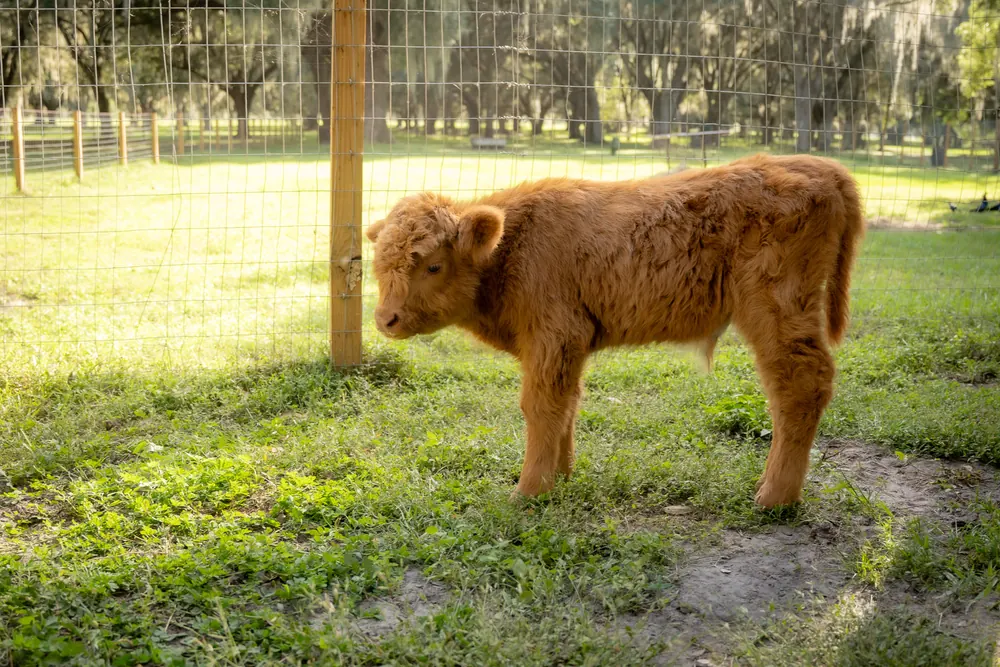
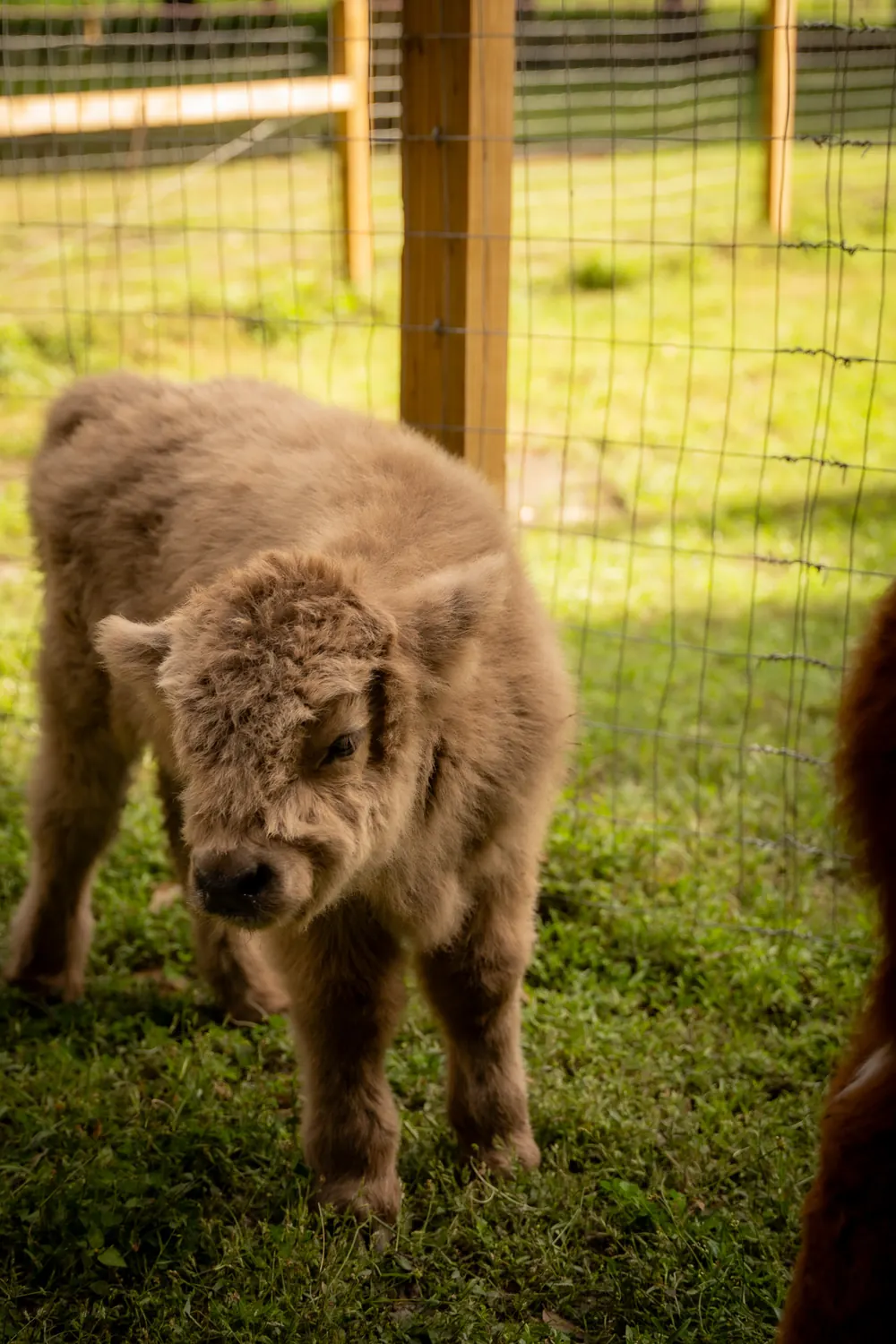
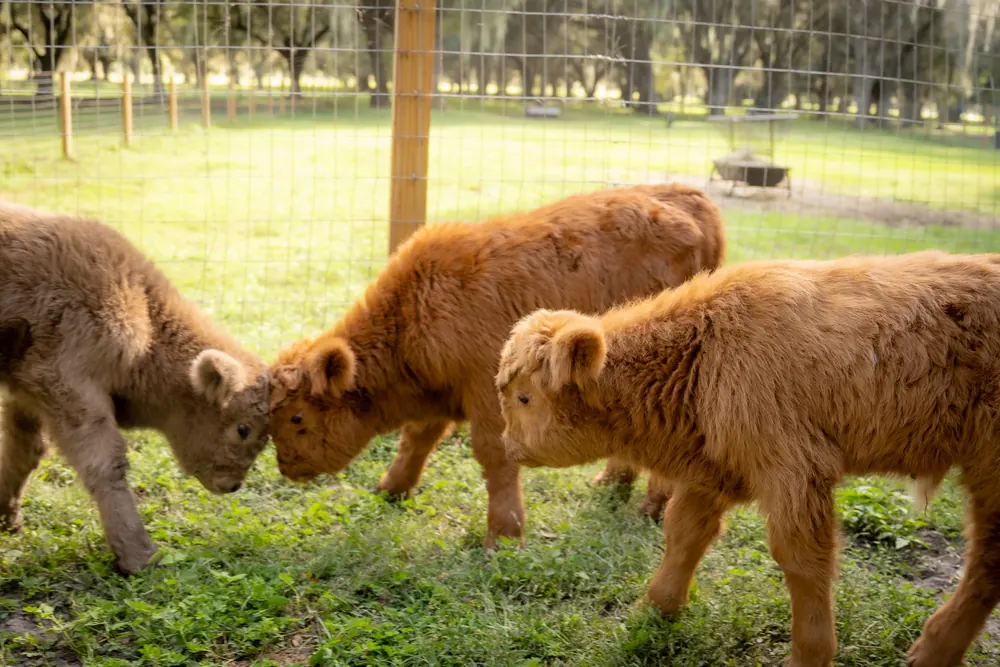
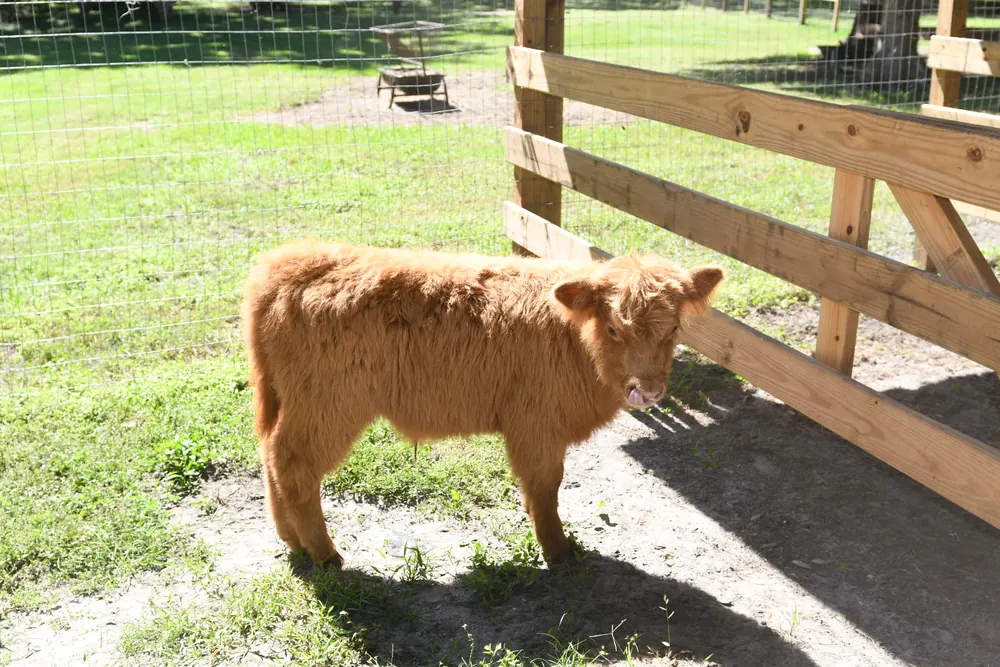
Want to take your own? Our Highland cow photo tips cover the best light, angles and times of day.
Highland Calves
18. Moms carry their calves for about nine months
Highland cows are pregnant for roughly 277 to 290 days, about the same as a human pregnancy, and almost always have one calf at a time.
19. Calves are small at birth
Standard Highland calves average roughly 53 to 55 pounds at birth, and mini Highland calves are smaller still. They are born with a soft, fuzzy coat and no visible horns.
20. They are famous for easy calving
Highland mothers usually calve on their own, and breeders prize the breed for it. Meet the babies in our baby Highland cow facts.
On The Farm
21. They are excellent foragers
Highlands evolved on poor, rough grazing, and they will happily browse on plants other cattle ignore. Some conservation groups use them to manage overgrown land. Here is what Highland cows eat.
22. They chew their cud
Like all cattle, Highlands are ruminants. Their stomach has four compartments, and they bring food back up to chew again, which helps them get the most out of grass and hay.
23. They should never live alone
Cattle are herd animals, and a Highland kept by itself gets stressed and lonely. Anyone thinking about owning one should plan for at least two. See do Highland cows make good pets?
24. Cow, bull, heifer or steer?
A cow is an adult female that has had a calf, a heifer is a young female that has not, a bull is an intact male and a steer is a castrated male. "Highland cow" is the everyday name for all of them.
25. Scots call them "coos"
In Scotland, a Highland cow is affectionately a "Hielan coo." You will see the word on mugs, signs and sweaters all over the country. (Spelling wanders on this side of the Atlantic too: the breed is sometimes written as hyland or hiland, but the official name is Highland.)
Meet Highland Cows Near Orlando
You do not have to fly to Scotland to meet a Highland cow. If your travels bring you to Orlando or Kissimmee, Mini Moo Land at Boggy Creek Airboat Adventures is home to a herd of mini Highland cows, including seven baby calves born this fall: Hershey, Milo, Biscuit, Cocoa, Mocha, Tipper and Smokey.
- General admission, $29.99: pet, cuddle and hand-feed the herd with our team guiding you. Just $19.99 when you add an airboat ride combo.
- VIP Calf Bottle Feeding, $65 per guest: admission included. Hold the bottle for a baby Highland calf daily at 10:00 AM, 1:00 PM or 4:00 PM. Each feeding has up to 7 bottles, so reserve ahead. Walk-ups are welcome when space allows.
- Hours and location: open 7 days, 9:00 AM to 5:00 PM, at 2001 E. Southport Rd., Kissimmee, FL 34746, about 35 minutes from Disney.
See what a Highland cow visit includes before you book.